
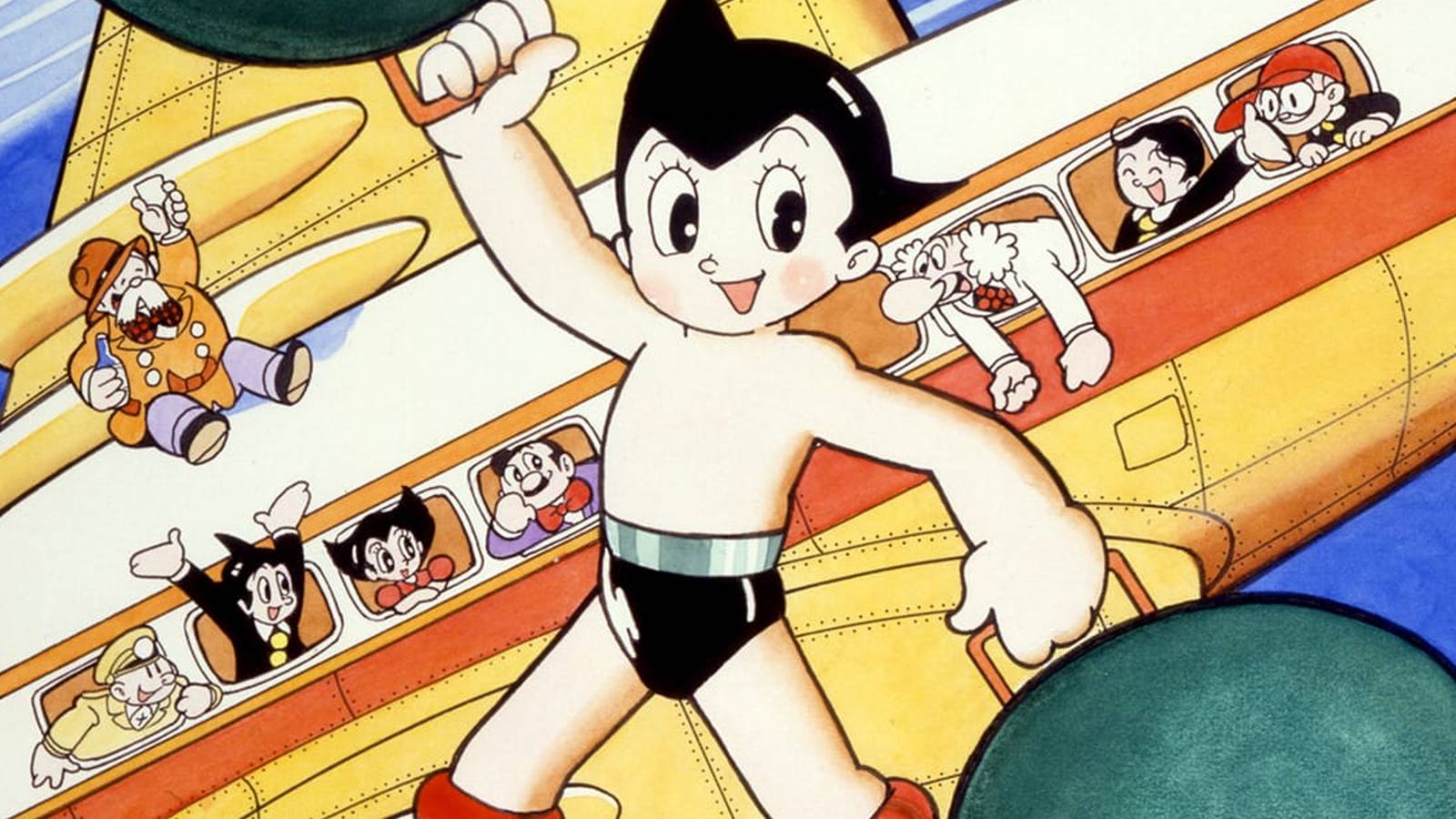
Manga history rewards pioneers, but foundational work rarely ages gracefully. While trailblazing authors built the narrative techniques modern anime series still rely on, their landmark titles carry outdated pacing, art styles, and political contexts that contemporary readers find difficult to tolerate. Even historically monumental series like Astro Boy now struggle to hold modern attention because these once-groundbreaking elements act as obstacles rather than storytelling strengths.
Picking up an early Cold War-era thriller or a 1970s horror epic today means confronting decisions that make sense for a different serialized audience but clash hard with contemporary expectations around clarity and momentum. Repetitive structures, exposition-heavy scripts and chaotic linework separate historical importance from an enjoyable reading experience. Astro Boy’s rigid episodic structure inherently relies on brief, self-contained conflicts explicitly designed for children consuming single magazine chapters, a narrative format that alienates modern adults accustomed to binging entire compiled volumes at once.
This rapid, predictable rhythm of chapter-by-chapter resolution leaves virtually no creative room for the profound character development and high-stakes, long-form tension found in sophisticated contemporary reimagining like Naoki Urasawa’s Pluto. The line work in Astro Boy reflects early cartoon-influenced simplicity as it prioritizes bouncy, round character designs over the detailed backgrounds and dynamic paneling of later shonen artists. Furthermore, Osamu Tezuka’s renowned star system constantly reuses identical character designs across entirely unrelated storylines.
This ultimately flattens Astro into a passive, reactive figure rather than a dynamic protagonist driven by personal growth and escalating narrative stakes. Robots battle in single-page skirmishes resolve through simple moral lessons, a structure that Naoki Urasawa's Pluto later exposed as ripe for reinvention specifically because Astro Boy's original chapters lack narrative weight. Modern readers used to serialized stakes find Astro Boy's world charming in theory but thin in practice.
Kenshiro's core loop in Fist of the North Star repeats with almost every arc where a mutant warlord terrorizes a village, Kenshiro pierces multiple pressure points, and the villain explodes several panels later. Buronson and Tetsuo Hara built entire arcs, including the Land of Shura and King Raoh's rise, around variations of this exact beat which drains tension from Fist of the North Star's back half despite escalating power levels. Hara's art improves dramatically as Fist of the North Star progresses, yet the fundamental structure never evolves alongside it.
Kenshiro gains new techniques and rivals, but the town-to-town, villain-to-villain rhythm remains locked from the first volume through the Shura arc, making long reading sessions feel repetitive rather than escalating. Fans who admire Fist of the North Star's influence on later action manga still describe marathoning the series as a battle against fatigue rather than suspense. The early volumes of Golgo 13 heavily trap Duke Togo's high-stakes assassination assignments inside exceptionally dense multipage geopolitical briefings that completely dominate entire chapters long before a single sniper shot is ever fired.
Takao Saito rigidly structures the manga around intricate Cold War proxy conflicts, complex arms deals and real-world intelligence agency maneuvers, a narrative choice that frequently reduces Duke Togo to a secondary figure operating in the shadows of his own missions. Saito's clinical and procedural approach works as journalism-adjacent thriller writing but resists the momentum modern manga readers expect from an assassin protagonist. Consequently, contemporary readers who are unfamiliar with the highly specific superpower politics of the 1960s and 1970s must constantly wade through exhausting stretches of historical exposition that Golgo 13 expects them to understand without ever fully explaining.
The mission briefings often ran longer than the missions themselves and Duke's trademark silence, meant to build mystique, instead reads as narrative absence during pages that should carry tension. The Cold War specificity that made Golgo 13 feel urgent to a contemporary Japanese audience now requires footnotes modern readers rarely have patience for. Devilman prioritizes raw emotional intensity over anatomical consistency, which produces action sequences where limbs, demon forms and panel geometry blur together into chaos.
Devilman's climactic battles, including Akira Fudo's transformations, rely on scratchy, rushed linework that obscures the exact visceral horror Nagai intended to showcase. Compare Devilman's clash choreography to Devilman Crybaby's clean, legible animation and the original manga's panels read as barely legible by comparison. Nagai's pioneering horror-shonen fusion in Devilman demanded speed over polish, since Nagai famously drew much of the manga in tandem with the '70s Devilman anime's rushed production schedule.
The manga’s grotesque demon designs remain genuinely disturbing, but the anatomical distortion meant to convey monstrous transformation frequently confuses the eye about who is fighting whom. Devilman's historical importance as a horror-shonen blueprint survives as art, but the reading experience itself fights the audience at every turn. Yoichi Takahashi stretches single soccer plays across dozens of pages in Captain Tsubasa, effectively transforming a solitary corner kick or dramatic overhead shot into a multi-chapter event overflowing with dense internal monologue and strategic calculations.
Tsubasa Ozora's iconic signature techniques, such as the famous Drive Shoot, unfold through a repetitive sequence of massive splash pages and intense inner narration that explicitly details the mechanics of the kick rather than allowing the visual storytelling to demonstrate the action organically. While this unique pacing successfully treats each individual match as an intricate psychological duel, it simultaneously stalls basic plot momentum and frustrates contemporary readers who are expecting fluid, realistic match progression. Takahashi's decision to prioritize a player's internal resolve over the pacing shaped decades of sports manga that followed.
Sadly, the technique ages poorly against faster contemporary titles like Haikyu!!. A single Captain Tsubasa match can span an entire volume, with Tsubasa's rivals delivering monologues about willpower between individual touches of the ball. As such, readers accustomed to modern sports manga's brisk match pacing often abandon Captain Tsubasa mid-match.