
Fantasy is such an expansive, storied, and prolific genre that there exists a myriad of subgenres under its umbrella, but it can all be broadly categorized into two boxes. Low fantasy is set in the real world, or a highly realistic historical setting, and magic in it tends to intrude upon an otherwise quite normal world. High fantasy, on the other hand, is all about vast fictional worlds where magic is a regular part of everyday living.
Both low and high fantasies can have exceptionally written magic systems (the set of rules that dictates how magic works in a story), but it's more common to find these sorts of legendary systems in high fantasy. For proof, one needn't look any further than classics like A Wizard of Earthsea and modern gems like Shadow and Bone, groundbreaking books that display some of the most fascinating worldbuilding the fantasy genre has ever seen on the printed page. Many elements define whether a book's worldbuilding is widely considered great, including a good magic system.
As long as it makes sense, is well-integrated into the fictional world's culture, and serves the tone and characters of the story well, a high fantasy book's magic system can be counted among the best. Young adult fantasy has given bookworms several of the most compelling magic systems in the genre's history, and Leigh Bardugo's magic system for Shadow and Bone is right up there as one of the best. The first installment in the trilogy of the same name, this YA gem was Bardugo's debut novel, and what an introduction it was.
Wonderfully plotted and elevated by some exceptional worldbuilding, it may not be particularly juicy or substantial fantasy, but it's more than entertaining enough for those who tend to enjoy the genre's YA variety. For all its minor flaws, however, Shadow and Bone is one of the modern fantasy books with the best magic systems. Known as the Small Science, this magic is practiced by users called Grisha, who are able to manipulate matter on a molecular level.
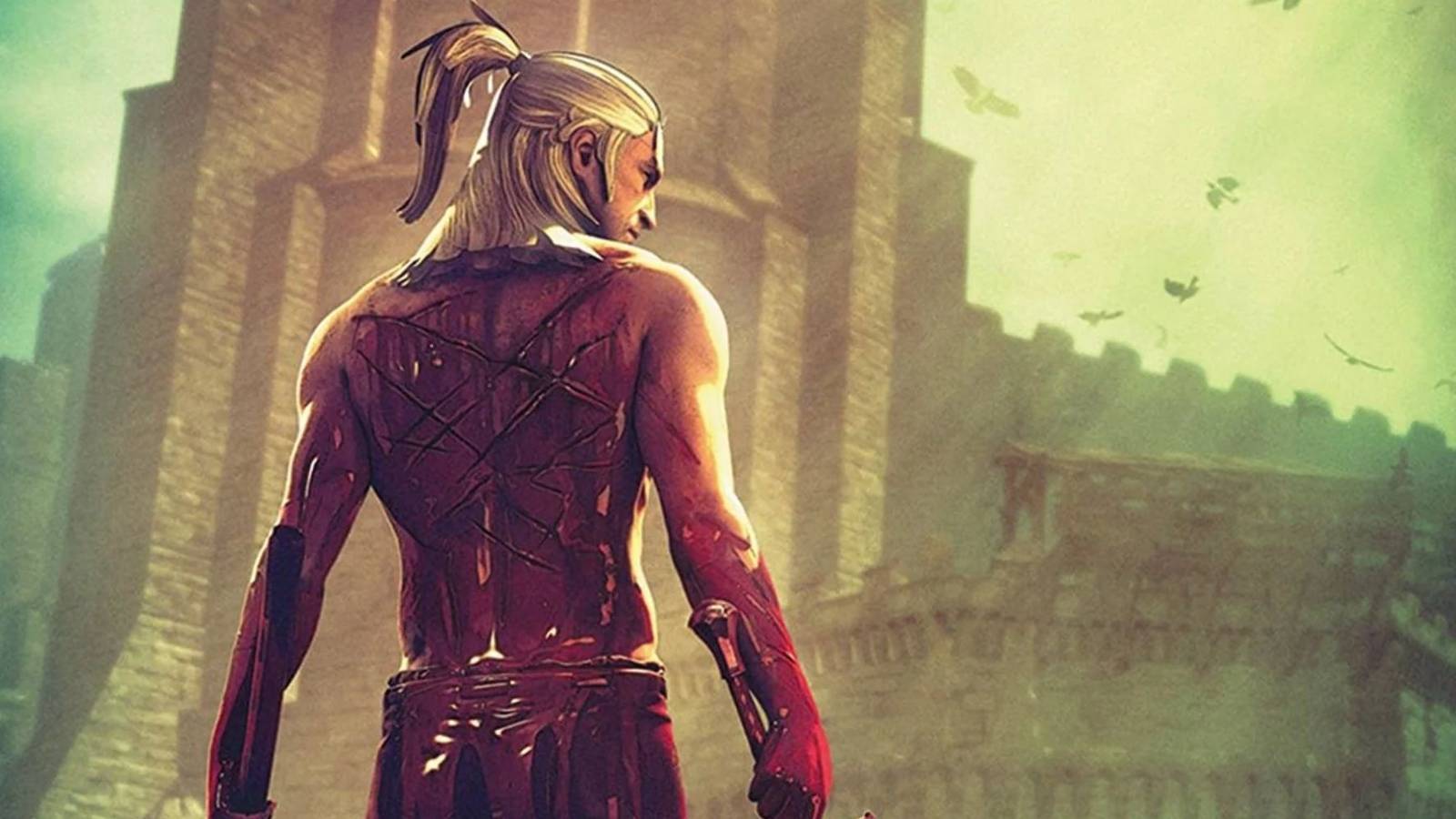
It's a hard and logical system whose tangible limitations make it drive the plot and character development forward in all sorts of meaningful ways. Polish fantasy writer Andrzej Sapkowski was the mind behind the Witcher series of books. They were well-known in Poland from the start, but it wouldn't be until CD Projekt Red's video game adaptations saw the light of day that the series was launched into proper international prominence.
Though Blood of Elves (which was first translated into English in 2008, 14 years after its original publication) was predated by the short story books Sword of Destiny and The Last Wish, this is the first novel in the series—and what an introduction it is, considering that it's among the best dark fantasy books of all time. Sword of Destiny and The Last Wish were technically the introduction to the magic system of the Witcher universe, but it's Blood of Elves that turns it into a far more structured, logical, and rigorous system. Ideal for those who love hard magic systems (those that have much stricter mechanics), Blood of Elves shows magic as both an art and a science that requires immense discipline, sacrifice, and rigorous study.
It's a fascinatingly complex and layered approach to high fantasy. There are few fantasy authors working today who are more prolific than Brandon Sanderson. But far from just being immensely productive, Sanderson is also an exceptional master of speculative fiction, particularly skilled at crafting some of the coolest and most memorable magic systems in the history of fantasy.
There is, for instance, The Stormlight Archive, one of the most essential fantasy book series of the 21st century. The series contains several distinct but interconnected magic systems which lovers of hard magic should immediately fall in love with. There's the Surgebinding that allows users to manipulate ten fundamental forces of nature; there's the magitech of Fabrials; and your darker and more unpredictable alternatives, Voidbinding and the Old Magic.
Sanderson crafts this tapestry of magic systems with admirable rigor and perfectly logical rules, making the sky-high stakes clear and tying magic to character growth. The Way of Kings is a phenomenal introduction to The Stormlight Archive and one of those rare books with better worldbuilding than Harry Potter, largely thanks to how its different magic systems shape the entire world of the series. Throughout the 20th-century history of speculative fiction, rarely have there ever been any authors more important or revolutionary than Ursula K.
Le Guin. Anyone interested in getting started on her work may as well jump right into her best-known book series: the high fantasy masterpieces of The Earthsea Cycle, starting with A Wizard of Earthsea. Regarded as one of the most influential children's fantasy classics in history, it's one of those classic fantasy books that are still a must-read in 2026.
It's a book that works on several levels: as a coming-of-age story, as a traditional fantasy epic, and as a phenomenal way to introduce younger readers to high fantasy. It's one of the most prominent examples of soft magic, where at no point does Le Guin treat the magic system of A Wizard of Earthsea like a scientific textbook. Rather, magic is largely psychological and heavily influenced by Taoist philosophy, where wizards' task is to maintain the fundamental balance of the universe.
Names in Earthsea carry literal magic power, a system tied deeply to the protagonist's coming-of-age journey. Though Patrick Rothfuss has kept fans waiting 15 years (and counting) for the third and final chapter in his Kingkiller Chronicles, one fact remains unchanged: The Name of the Wind is one of the most foundational works of literary high fantasy of the 2000s, one of those fantasy books better than most movies out there. It's a phenomenal introduction to the story of Kvothe, elevated by some of the most beautiful and rhythmic prose that the fantasy genre has seen in years.
Epic in scale yet deeply intimate in its character-driven scope, it's a masterpiece whose fame is well-earned. A brilliant blend of hard and soft elements that boosts some of the most enrapturing world-building fantasy fans can find. A major source of The Name of the Wind's charm is its magic system, a brilliant blend of hard and soft elements that boasts some of the most enrapturing worldbuilding that fantasy fans can find in a 21st-century novel.
Sympathy is a hyper-logical hard magic that's as fascinating to learn about as it is fun to watch in action, while Naming (clearly inspired by Le Guin's Earthsea) is a wonderfully poetic soft magic. This perfectly-balanced blend adds volumes to the sheer depth of The Name of the Wind's lore and philosophy, making it one of the most layered works of high fantasy in recent memory. Robert Jordan's The Wheel of Time series was originally planned as a trilogy, but ended up spanning a whopping 14 volumes in the end.
The result? Some of the most legendary works of high fantasy since J. R.
R. Tolkien, including the series'masterful opening chapter, The Eye of the World. Every Wheel of Time novel could technically be counted among the fantasy books with the best worldbuilding, but Eye of the World is particularly worthy of praise for how masterfully it introduces the reader to this world, these characters, and this groundbreaking magic system.
Before The Eye of the World, fantasy books' magic systems were largely governed by a kind of Tolkienesque mysticism. The One Power introduced here was the genre's first significant shift toward more rule-based magic systems, and for that alone, it's one of the most revolutionary magic systems in the history of high fantasy. In fact, it was Jordan and The Eye of the World that really pioneered the idea of magic being a system, and not just a vague element inherent to the fantasy genre.
It's historic, and it's still incredibly entertaining to read. You can never go wrong with the classics, and it doesn't get much more classic than Canadian author Steven Erikson's massive epic fantasy series Malazan Book of the Fallen. Several of the most perfectly written fantasy books of all time are contained within Malazan, and though Gardens of the Moon may or may not be one of the best in the series (depending on which fan you ask), it sure was a phenomenal introduction to it.
And as a phenomenal introduction to Malazan, it fittingly serves as an impressive introduction to the world's magic system. In the world of Malazan, magic flows from Warrens, self-contained parallel universes each tied to a certain element or concept. A series of 10 epic books consisting of well over 3 million words naturally requires a fittingly complex magic system, and the Warrens system present in Gardens of the Moon is nothing if not complex.
There is tremendous tension, mystery, and even cosmic horror in the magic of Gardens of the Moon, helping establish the riveting world that fuels Malazan. As if any more proof were needed that there's no fantasy author working today quite like Brandon Sanderson, there's also the Mistborn series, an essential part of Sanderson's overarching Cosmere shared universe. Mistborn: The Final Empire is the beginning of the first trilogy of the series, known as Era One, and it's easily one of the best fantasy novels of the last two decades.
The book's character writing is relatively shallow, but the true star of the show here is the worldbuilding, which may very well be the best of Sanderson's whole bibliography. It was actually Sanderson himself who coined the distinction between hard and soft magic systems, and the magic system found in The Final Empire may well be the best hard magic system ever printed on a page, whether it's high or low fantasy we're talking about. If Era One of Mistborn is one of the best book trilogies of all time, it's largely because The Final Empire's Allomancy is such a fascinating concept through and through.
Tightly constructed, mathematically symmetrical, and largely dictated by the socioeconomic class divide, it's one of the most complex and engrossing magic systems fantasy has ever seen.