
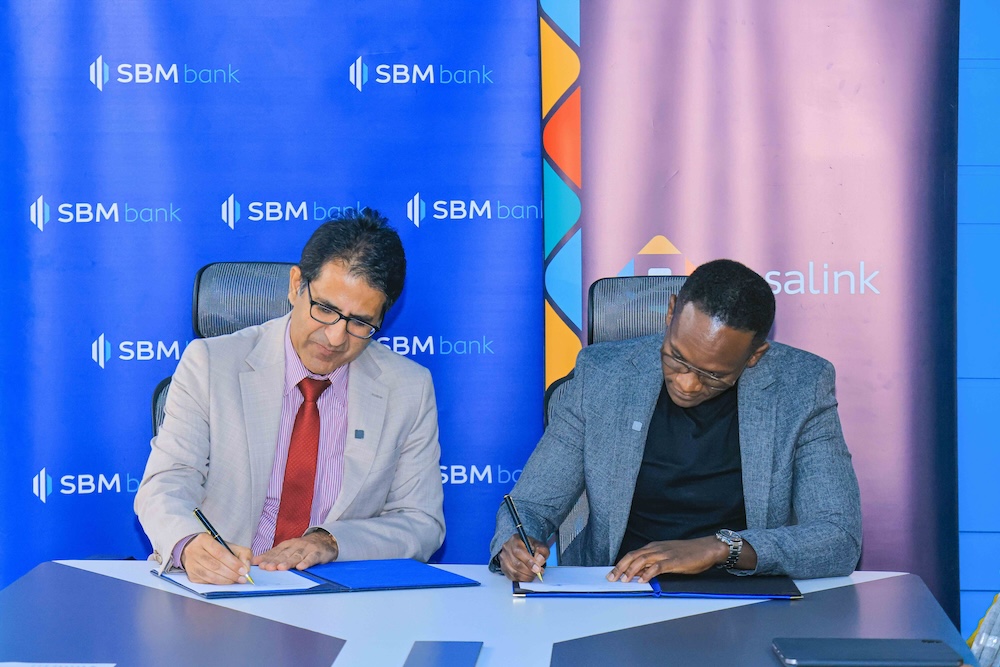
Kenya’s banking industry has rolled out its most coordinated effort yet to reclaim a larger share of everyday digital payments, with 19 banks and microfinance banks adopting sharply lower Pesalink transfer fees. Customers can now send up to KSh1,000 free of charge, while transfers above that amount and up to KSh999,999 attract a flat KSh20 fee. The new pricing replaces charges that previously reached KSh250 depending on the value of a transaction.
On the surface, the change appears to be a simple fee reduction. It is, however, part of a broader attempt to make bank transfers a more attractive alternative for millions of people who have come to rely on mobile money for routine payments. The timing reflects how Kenya’s payments landscape has evolved over the past decade.
Cash continues to play a smaller role in everyday transactions, while mobile banking and mobile money have become the preferred channels for sending, receiving and paying for goods and services. Central Bank of Kenya data illustrates that transition clearly. ATM transactions have fallen from more than 20 million a month at their peak in 2012 to about 3.
2 million in February 2026, the lowest monthly figure since the regulator kicked off publishing the statistics. The decline extends beyond transaction volumes, with the value of cash withdrawals also falling to a six-year low as consumers complete more financial activities digitally. Those changes have altered what banks compete for.
Deposits remain important, but transaction volume has become just as valuable because it keeps customers engaged within a bank’s digital ecosystem. Every payment made directly from a bank account represents one less reason to transfer funds into a mobile wallet before completing a purchase or sending money to another person. That explains why banks have chosen to work together on a common pricing model instead of competing through separate promotional campaigns.
The new Pesalink tariff is particularly competitive for low- and mid-value transfers. While M-Pesa remains free for transactions of up to KSh100, customers pay KSh7 when sending between KSh101 and KSh500 and KSh33 for transfers between KSh501 and KSh1,000. Under the revised Pesalink model, those same transfers are free provided both institutions participate in the programme.
Any transfer above KSh1,000 attracts a flat KSh20 fee regardless of value, making it substantially cheaper than the tiered pricing that has traditionally applied to both bank transfers and mobile money. Lower prices alone, however, are unlikely to change payment habits overnight. M-Pesa’s position rests on much more than transaction fees.
It benefits from widespread consumer familiarity, a nationwide network of agents, strong merchant acceptance and deep integration into daily commerce. Many people choose the service because they know almost every recipient can receive money through a mobile wallet immediately. Convenience, rather than careful price comparison, has shaped customer behaviour.
Banks appear to recognise that reality, which is why the fee reduction is accompanied by changes aimed at making transfers easier to complete. Pesalink plans to introduce transactions based on mobile phone numbers and national identity card numbers instead of requiring customers to enter bank account details. That addresses one of the most common frustrations associated with bank transfers.
People remember phone numbers far more easily than account numbers, and reducing the amount of information needed to send money removes friction from the payment process. The initiative also builds on a payment network that has grown well beyond traditional banking. Pesalink already connects more than 195 financial institutions, including banks, SACCOs and fintech wallets, while work continues to expand interoperability with telecommunications providers.
That infrastructure gives participating institutions a stronger foundation to compete across the wider digital payments market because money can move quickly between different financial platforms rather than remaining confined within individual banks. Evidence suggests the platform already has momentum. Pesalink processes more than one million transactions each month, with daily transaction values ranging between KSh5 billion and KSh6 billion.
Earlier Central Bank data also displayed the value of monthly transactions on the platform growing by more than 40 percent year on year. Those figures indicate that consumers and businesses already trust the service for significant payment volumes. The new pricing structure aims to encourage more frequent everyday use rather than simply supporting larger transfers.
Another factor working in banks’ favour is the continued expansion of Kenya’s digital economy. Communications Authority sector statistics show mobile broadband subscriptions and mobile data consumption continue to grow, while mobile money penetration remains among the highest in the world. Consumers are conducting more of their financial lives through smartphones, creating an environment where digital payment platforms compete directly for attention every day.
Banks no longer need customers to visit branches or ATMs to remain active account holders; they need them to choose bank-based payment rails when moving money. Evidence suggests the platform already has momentum. Pesalink processes more than one million transactions each month, with daily transaction values ranging between KSh5 billion and KSh6 billion.
Earlier Central Bank data also displayed the value of monthly transactions on the platform growing by more than 40 percent year on year. Those figures indicate that consumers and businesses already trust the service for significant payment volumes. The new pricing structure aims to encourage more frequent everyday use rather than simply supporting larger transfers.
Another factor working in banks’ favour is the continued expansion of Kenya’s digital economy. Communications Authority sector statistics show mobile broadband subscriptions and mobile data consumption continue to grow, while mobile money penetration remains among the highest in the world. Consumers are conducting more of their financial lives through smartphones, creating an environment where digital payment platforms compete directly for attention every day.
Banks no longer need customers to visit branches or ATMs to remain active account holders; they need them to choose bank-based payment rails when moving money. That assists explain why the institutions still outside the programme matter. Major lenders such as Equity Bank, Co-operative Bank, NCBA, I&M Bank and Standard Chartered have yet to adopt the discounted pricing.
Their participation would expand the initiative’s reach substantially because they collectively serve millions of retail and business customers. A broader industry rollout would also make the pricing model more predictable for consumers, reducing uncertainty about whether a transfer qualifies for the lower charges. The coming months will show whether the strategy achieves its intended outcome.
Growth in participating banks, rising Pesalink transaction volumes, adoption of phone number-based transfers and wider interoperability with digital wallets and telecommunications providers will offer clearer evidence than pricing alone. Consumer behaviour changes gradually, particularly when established payment habits are involved, but removing cost and complexity gives banks a stronger position from which to compete. Kenya’s payments market has entered another stage of development.
The debate is no longer centred on whether digital payments will replace cash; that transition is already well advanced. The competition now revolves around which platforms consumers choose when moving money between friends, families and businesses. Cheaper Pesalink transfers are one part of that contest, but the larger story is the banking sector’s effort to make account-to-account payments as simple, accessible and routine as sending money through a mobile wallet.
Download the free Kaspersky SMB Cybersecurity Guide here to learn how businesses can move beyond traditional antivirus and build a more resilient approach to cybersecurity. Go to TECHTRENDSKE. co.
ke for more tech and business news from the African continent and across the world.